
Articles on Fabrics & Materials
Debunking the Myths Surrounding Preshrunk T-Shirts
Aug 17th 2026
See a "preshrunk" tag on a t-shirt and most people assume the shirt has already been through the wash, so it's done shrinking for good. That's not quite what's happening. Preshrinking is something done to the fabric at the mill, months before it ever becomes a shirt, and it doesn't fully stop shrinkage — it just knocks most of it out ahead of time. Here's the actual mechanics of it, and why the fabric you pick matters more than the "preshrunk" label itself.
Why Fabric Shrinks at All
Fibers get stretched during spinning and knitting. Yarn is pulled taut on the machines that turn it into fabric, and that tension gets locked into the material. Add heat and moisture — a hot wash, a hot dryer — and the fibers relax back toward their natural, unstretched length. The fabric pulls in on itself as that happens. That's shrinkage. It's not the fabric "wearing out," it's the fabric returning to the shape it wanted to be in the first place.
How much a given shirt shrinks comes down almost entirely to what it's made of, which is why two shirts both labeled "preshrunk" can behave completely differently in the wash.
100% Cotton: The Fiber That Moves the Most

Cotton is a natural cellulose fiber, and cellulose absorbs water into the fiber itself rather than just sitting wet on the surface. When a cotton fiber takes on moisture it swells; when it dries back out, it contracts. Run that cycle in a hot wash and hot dryer and the fabric locks in tighter than before. That's why an untreated, never-preshrunk 100% cotton shirt can drop a full size in one wash.
Preshrinking — sometimes called compressive shrinkage or sanforization — runs the raw cotton fabric through rollers that physically compact the weave before it's ever cut into a shirt pattern. It closes up the extra room between fibers so there's less left to give later. A shirt like the Gildan 5000 goes through this before it's sewn, which is why it holds its size reasonably well — but cotton is such a thirsty fiber that some shrinkage always survives the process. That's the source of the 3–7% figure you'll see quoted for preshrunk cotton: it's not zero, it's just small enough that most people never notice.
Cotton/Poly Blends: Diluting the Problem

Polyester doesn't behave like cotton at all. It's a synthetic fiber that's essentially hydrophobic — it doesn't absorb water into its structure the way cotton does, so it doesn't swell and contract through a wash cycle. It just doesn't have much shrinkage to give in the first place.
Blend a shirt's fabric from cotton and polyester and you're diluting the fiber that actually shrinks with one that basically doesn't. A 50/50 blend like the Gildan 8000 DryBlend moves noticeably less than a pure cotton tee, even before preshrinking is factored in. Push the ratio further toward polyester — 60/40 or 65/35 blends — and shrinkage gets even less of an issue. It's the same reason blends resist wrinkling better: less cotton fiber means less of the moisture-driven movement that causes both problems. If you want a fabric feel closer to cotton with a lot more size stability, this is the trade-off to know about. Browse the full range in Soft/Retail-Fit Blend Tees.
Performance Fabrics: Built Not to Move
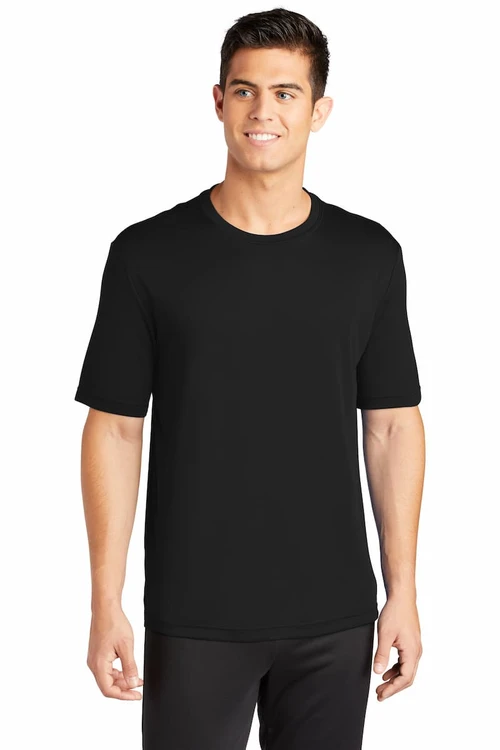
Performance tees like the Sport-Tek ST350 are usually 100% polyester, engineered specifically to pull moisture away from the body rather than absorb it. That same property that makes them good at wicking sweat is what makes them nearly immune to shrinkage — there's no swelling fiber to relax back down. These are the most dimensionally stable shirts in the building, wash after wash.
One caveat worth knowing: if a performance fabric has spandex or elastane mixed in for stretch, high heat can degrade that fiber over time. The shirt won't shrink from it, but it can lose some of its recovery and stretch back a little less snugly. Skip the high-heat dryer setting on stretch performance gear and you avoid that problem entirely.
Preshrunk vs. Shrink-to-Fit
These two terms get mixed up constantly, and they mean almost opposite things. Shrink-to-fit garments — raw denim is the classic example — are sold intentionally oversized, with the expectation that the first hot wash shrinks them down into their real fit. Preshrunk is the reverse philosophy: the shrinking already happened at the mill, so the size on the tag is close to the size you'll wear for the life of the shirt. If you buy a preshrunk tee expecting it to size down like shrink-to-fit denim, you'll end up a size too big.
Keeping Whatever Shrinkage Is Left to a Minimum
Preshrinking gets you most of the way there, but a few habits protect the rest:
- Wash in cold water instead of hot — heat is what drives the fiber relaxation that causes shrinkage.
- Use a low-heat or air-dry setting rather than high heat.
- Pull shirts out of the dryer while they're still a little damp instead of running a full cycle.
- Turn printed or embroidered shirts inside out to protect the graphic while you're at it.
Common Questions
Will 100% cotton shrink even if it's labeled preshrunk?
Yes, a little. Expect somewhere around 3–7% additional shrinkage, mostly showing up in the first couple of washes and then leveling off.
Is a preshrunk shirt true to size straight out of the package?
Yes — the size on the tag already accounts for the preshrinking process, so it should fit as labeled from the first wear.
Does preshrinking affect how a print or embroidery looks?
No. Preshrinking happens to the raw fabric before it's cut and decorated, so it has no bearing on print or stitch quality afterward.
Which fabric should I pick if I want zero shrinkage?
A 100% polyester performance fabric will move the least. A cotton/poly blend is the middle ground — more cotton feel, meaningfully more stable than pure cotton. Pure cotton will always have the most give, preshrunk or not.
Find the Right Fabric for the Fit You Want
Whether you want the classic cotton hand-feel, a blend that splits the difference, or a performance fabric built to hold its shape through the wash, it comes down to picking the right base shirt for the job:
- Cotton T-Shirts — the classic feel, preshrunk to minimize (not eliminate) movement
- Cotton/Poly Blend Tees — noticeably more size-stable, still soft
- Performance Tees — built for the most consistent fit, wash after wash